Hey again!
Welcome to the third installment of my Intro to Flexible Dieting series. Truth be told, I could have said SO MUCH MORE, I do have almost 2 decades of experience using this approach after all, but I really, REALLY tried to keep it as simple as I possibly could while still providing you with details that will improve your understanding of why I provide the guidance I do.
I hope you can feel the energy behind these posts is fueled by a deep desire to help women understand just how easy managing their diet really is. That’s not to say sticking to it is easy, just the process and the why is easy & (fairly) simple. If I can help even one woman avoid the terrible relationship with food I had for so long, I have accomplished my mission.
That being said, we are going to dive into Steps 5 & 6 today. Hopefully, you’ve practiced 1-4 already, but if you haven’t you can start now by going to part 1 and part 2, and I will happily answer any and all of your questions.

Step 5: Set up macros – Now that Gal has her total daily intake set (we are going to work with the calories from the example I gave all the way back here), we need to address how she will reach that intake.
For most of my first-time macro counters, I begin with giving them a protein goal and a total calorie goal. Unless you are a physique competitor or an advanced dieter, it is really unnecessary to try to finagle counting protein, carbs, and fat all at once, but I do find it helpful to keep in mind that 1g of carbs is 4 calories & 1g of fat contains 9 calories.
There are multiple schools of thought regarding just how many of your daily calories to get from protein, but I typically assign approximately 1g/lb of body weight or 2.5g/kg of body weight (Campbell et al., 2018). Since I am in the U.S., I am going to stick with lbs. For some of you, 1g per pound may seem like SO much, but once you are eating at a deficit it will help you enormously. Why?
- Protein has been shown to satiate dieter’s appetites (Leidy et al., 2010).
- Protein supports muscle retention while at a caloric deficit – meaning you do not sacrifice as much muscle during weight loss, so more of your lost weight comes from body fat (Evans et al., 2012).
- Protein stimulates your metabolism through what is known as the “thermic effect of food” (Pesta & Samuel, 2014)
Another way to think of this is to think of the total percentage of calories in protein you are going to eat per day. When I encounter clients who find it easier to think in this way, I typically assign somewhere between 35%-40%.
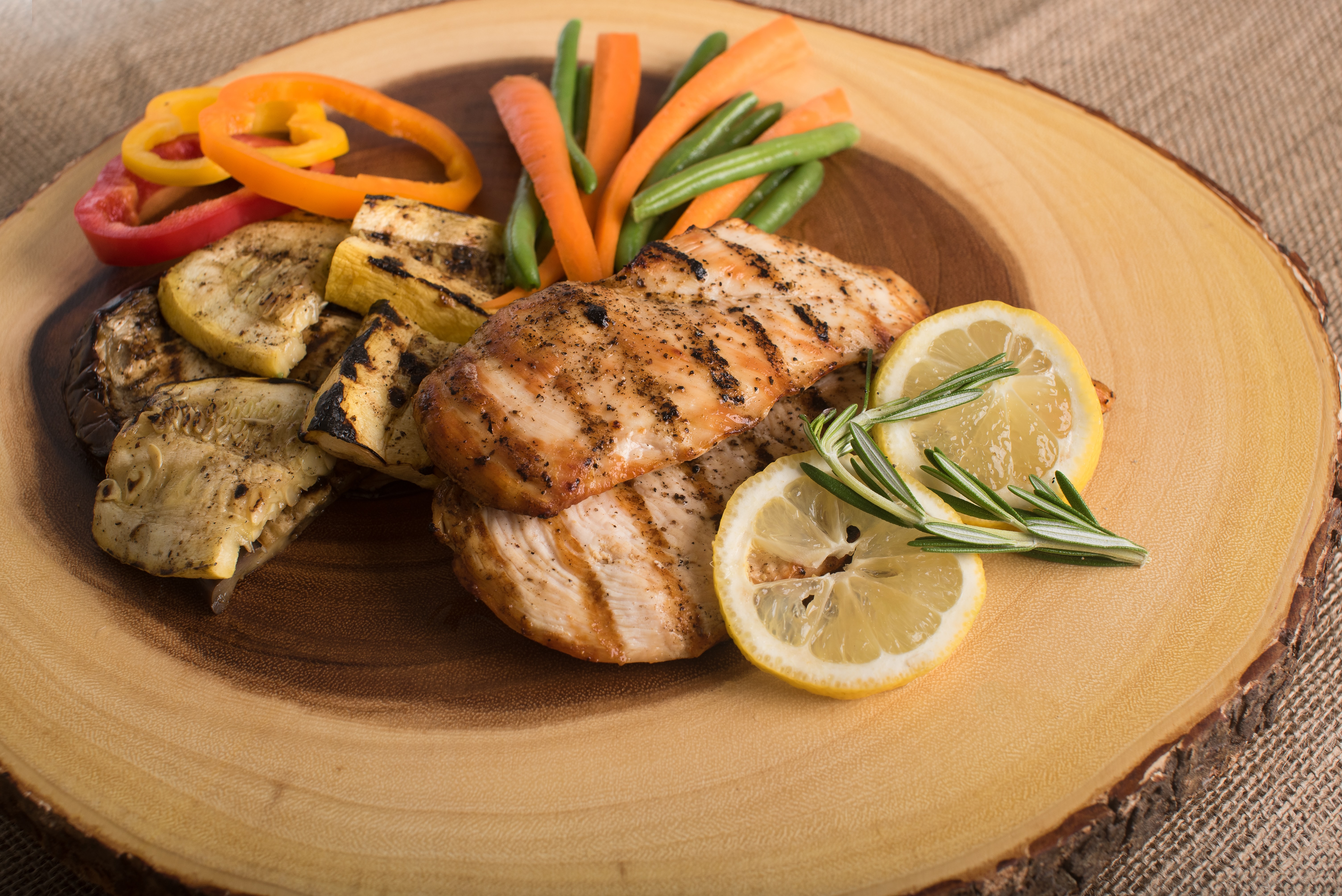
In our example, we are talking about Gal. We know that Gal has a girlfriend’s wedding coming in 16 weeks and she wants to lose somewhere around 10 lbs. We have not yet established her weight, but for the purpose of our example, we are going to say that Gal is about 140 lbs. Easy enough, right? 140 lbs = 140g Protein per day.
Gal’s total caloric intake on her diet is: 1343 calories per day
Gal’s total calories consumed via protein intake: 140g x 4 cal/gram=560 calories/day This means that approximately 42% of her total caloric intake will come from protein.
Now, you may be asking, why I would assign such a high percentage of calories to protein for Gal when I just said that I would typically assign somewhere between 35%-40%. Well, that’s because Gal has a pretty specific goal for a specific period of time. If Gal wanted to just diet for 16 weeks, without a goal weight in mind, I would likely err on the side of a little more balance, but what I hope you are really gathering is that these numbers are flexible to a certain degree and should be dependent on what clients can adhere to.
I realize I have spent a long time talking about protein intake, but that is because it is powerful and important. Overwhelmingly more of the clients of mine that adhere to their protein intake achieve their weight-loss or body fat percentage goals. It is a game-changer for me, and I want you to see the same success that I, and countless other women that I have trained also see.
Let’s take a moment to cover how to utilize the remaining calories for your day.
- Eat in a way that feels natural to you, just stay within your calorie goal.
- Pay attention to how you feel when you eat a large percentage of fats or carbs on any given day.
- As you track your food longer and gather more data, tailor your intake percentages to meet what helps you adhere consistently. This is where the magic happens.
Step 6: Modify your intake as you monitor your results – This is the last step I am going to share with you, I promise! As you progress along in your diet, you should monitor your progress at regular intervals. Many of my clients who are in diet phases check in with me the day after they have had a full day of rest.
Why?
A: Because they have had the opportunity to recover as much as they can and inflammation will not be a factor that skews their scale weight.
Use multiple ways of tracking progress. Use scale weight for calculation purposes, do measurements around your bust, waist, & hips (sometimes I add arms and legs too for more tracking depending on a person’s body-type), AND check to see how closely you adhered to your goals.
Once you see your progress, recheck your calculations to figure out how close your projections were. If your target was 1 pound per week, and you lost 2, you might be able to eat more. If you lost less, you might want to readjust. I typically wait a few weeks for clients to get into the groove before making many adjustments. Factors like new workout programs, more volume of exercise or even fiber, less sleep, or hormones can all skew scale weight, so do not be afraid to give yourself a 2 or even 4-week sample before you check your calculations and decide to eat more or less.

This is a relatively simple breakdown of how to successfully diet using a flexible approach. There are many more little tidbits I will share at some point, but hopefully, this is enough to get you on your way. If you are overwhelmed, that is okay, much of this is just practicing and failing. Failing teaches you lessons just as much as the daily practice so embrace both. I teach people this process daily and am here for you even if all you have is a question, but if you find that you need someone to do the math for you or just need someone to keep you accountable – that is what I do in my online coaching business and I would love to embark on that path alongside you.

If this helped you at all, I would love it you would help me out by sharing it on your social media channels. You can tag me on instagram @dianabecker12 or on twitter @dianaleighbecker
References:
Campbell , B., Aguilar, D., Conlin, L., Vargas, A., Schoenfeld, B. J., Corson, A., … Couvilllion, K. (2018, July 3). Effects of High Versus Low Protein Intake on Body Composition and Maximal Strength in Aspiring Female Physique Athletes Engaging in an 8-Week Resistance Training Program. https://pubmed.ncbi.nlm.nih.gov/29405780/.
Evans , E. M., Mojtahedi, M. C., Thorpe, M. P., Valentine, R. J., Kris-Etherton, P. M., & Layman, D. K. (2012, June 12). Effects of protein intake and gender on body composition changes: a randomized clinical weight loss trial. Nutrition & metabolism. https://pubmed.ncbi.nlm.nih.gov/22691622/.
Leidy , H. J., Tang, M., Armstrong, C. L., Martin, C. B., & Campbell , W. W. (2010, September 16). The effects of consuming frequent, higher protein meals on appetite and satiety during weight loss in overweight/obese men. Obesity (Silver Spring, Md.). https://pubmed.ncbi.nlm.nih.gov/20847729/. Pesta, D. H., & Samuel, V. T. (2014). A high-protein diet for reducing body fat: mechanisms and possible caveats. Nutrition & metabolism, 11(1), 53. https://doi.org/10.1186/1743-7075-11-53






 diana-becker.com